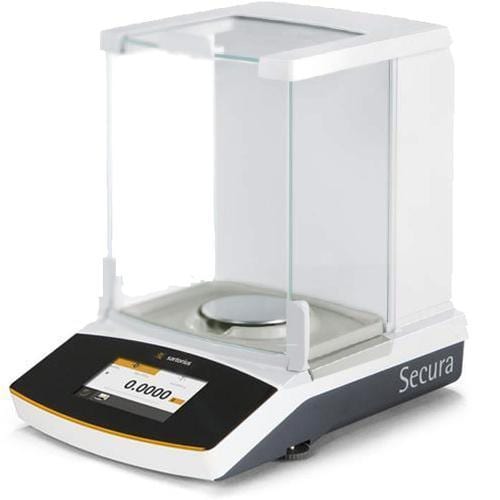
Analytical balance or precision balance — which do I need?
Short answer
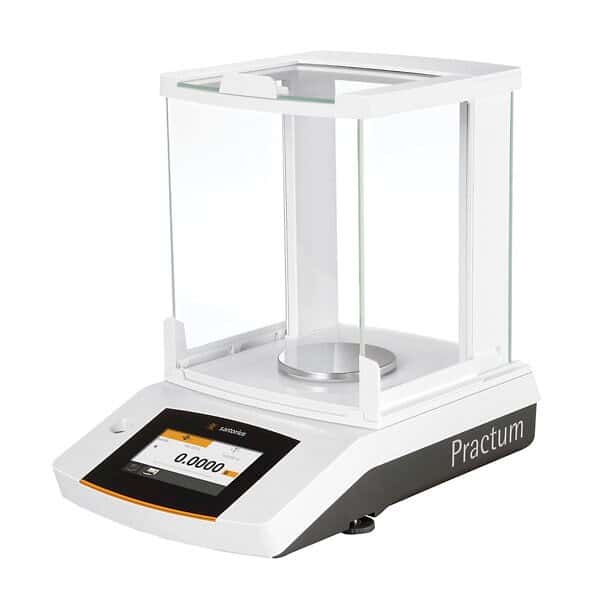
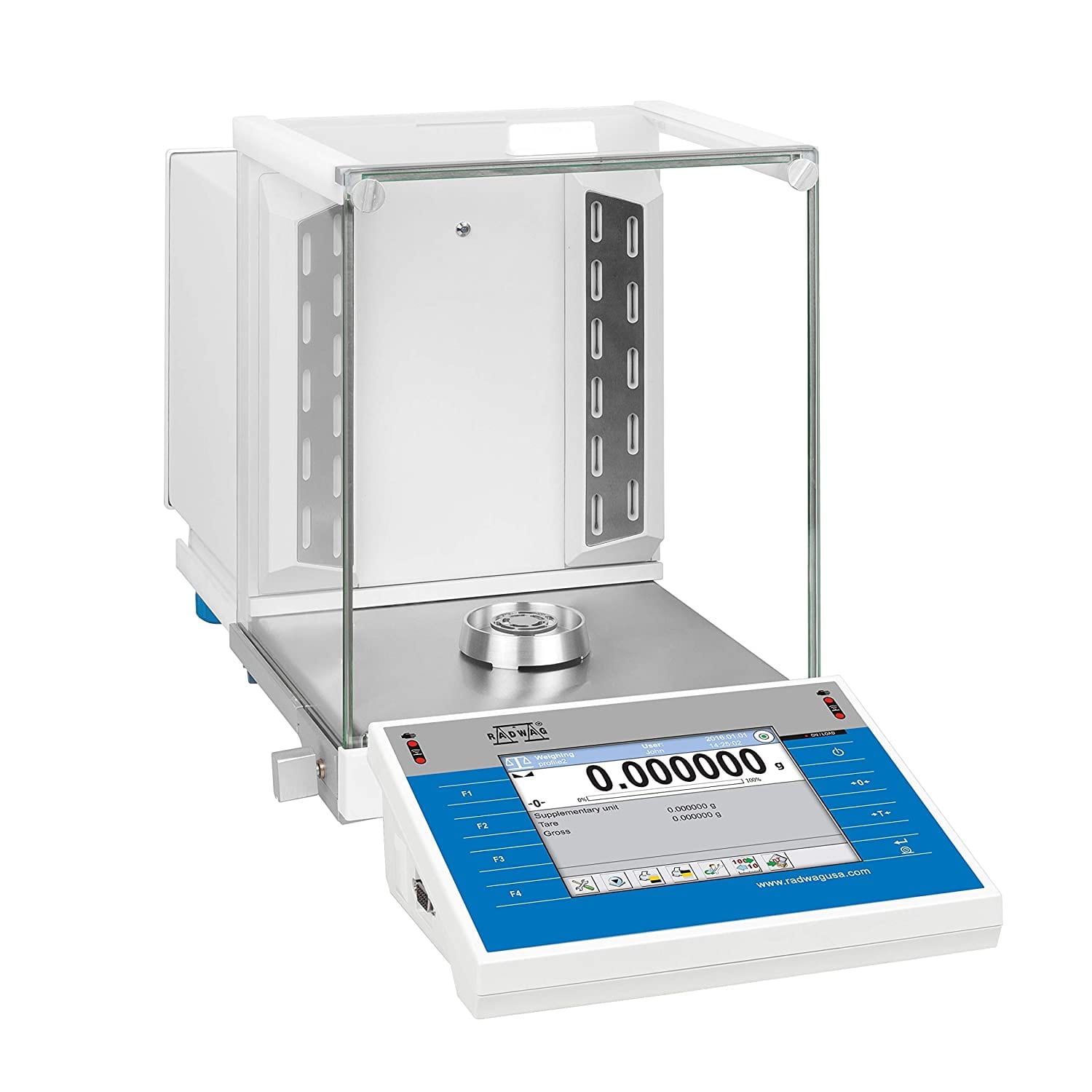
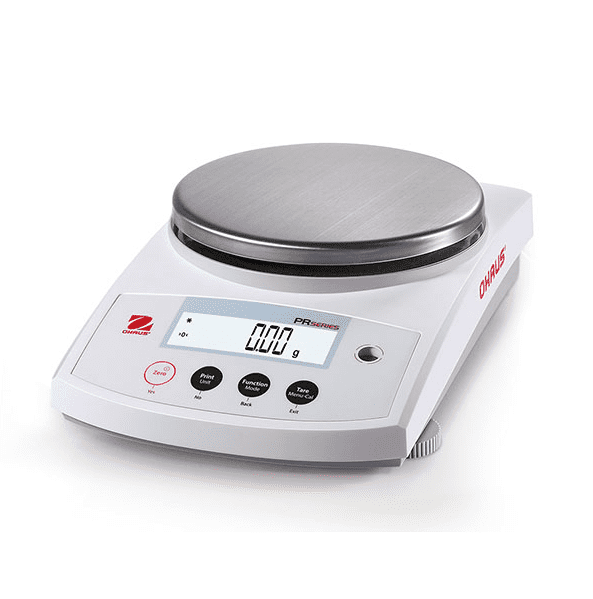
Choose an analytical balance when you need 0.0001 g (0.1 mg) readability or finer — assay work, reference standards, USP <41> weighing, trace sample prep — and accept the draft shield, the levelling routine and the longer stabilisation time that come with it. Choose a precision (top-loading) balance when 0.001 g to 0.1 g is enough and you need more capacity, a bigger pan and faster throughput: formulation, teaching labs, coating checks, food R&D and light production weighing. The dividing line is readability, not price: if your tightest tolerance is 0.01 g or looser, an analytical balance will slow you down without making the result better.
Written for laboratory managers, QC chemists, pharmacists, universities, R&D and production technicians.
Does this apply to you?
- Your method or SOP specifies a sample mass in milligrams.
- You weigh reference standards, or your result feeds a concentration calculation.
- Readings drift when someone walks past — that is a draft-shield problem, not a faulty balance.
- You need to weigh 2 kg of raw material and 200 mg of additive on the same bench (that is two instruments, not one).
How to decide
1. Start from the smallest mass you must weigh
The smallest sample sets the instrument. Weighing 50 mg on a 0.01 g balance means a 20% possible error before you account for anything else.
2. Check the capacity you also need
Analytical balances usually top out around 120-320 g. If your heaviest weighing is a 2 kg beaker, you need a precision balance as well, not instead.
3. Plan the location before the purchase
Analytical work needs a heavy, isolated bench away from doors, HVAC vents and centrifuges. Precision balances tolerate a normal bench.
4. Decide on internal calibration
Internal (motorised) calibration is worth it wherever temperature swings, where the instrument moves between rooms, or where GLP/GMP records must show routine adjustment without handling weights.
5. Budget the accessories that make the spec real
Anti-vibration table, in-use cover, ionizer for static-prone powders, and a set of ASTM Class 1 or OIML E2 check weights. Without these the headline readability is not achievable.
Side by side
| Analytical balance | Precision balance |
|---|---|
| 0.1 mg or 0.01 mg readability | 0.001 g to 0.1 g readability |
| Typically 120-320 g capacity | Typically 200 g to 30 kg capacity |
| Draft shield required | Open pan, often with a windshield option |
| Slower settling, environment-critical | Fast settling, tolerant of a normal bench |
| Assay, reference standards, USP <41> | Formulation, QC, teaching, production |
Frequently asked questions
Can an analytical balance replace a precision balance?
Rarely. Capacity is the limit — most analytical balances stop near 320 g, so anything heavier still needs a top-loader. Labs commonly run one of each.
Why does my analytical balance reading keep drifting?
In order of likelihood: air movement with the draft-shield door open, temperature difference between sample and chamber, static on plastic or powder, an unlevel or flexing bench, and finally an overdue calibration.
What is the minimum weight for USP <41>?
USP <41> sets the minimum sample weight at the mass where repeatability (2 x standard deviation of ten replicate weighings, divided by the sample mass) is within 0.10%. It is determined for the individual balance in its actual location, not read off a datasheet.
Do I need internal calibration?
It is strongly recommended for analytical work and for any regulated environment. It removes the biggest source of user error — calibrating with a weight that is handled, dirty or of the wrong class.
Still not sure? Tell us the job.
Describe what you weigh, the heaviest load and the tolerance you need to hold, and we will specify the instrument — including whether it has to be legal for trade. Same-day answers from Cypress, Texas.