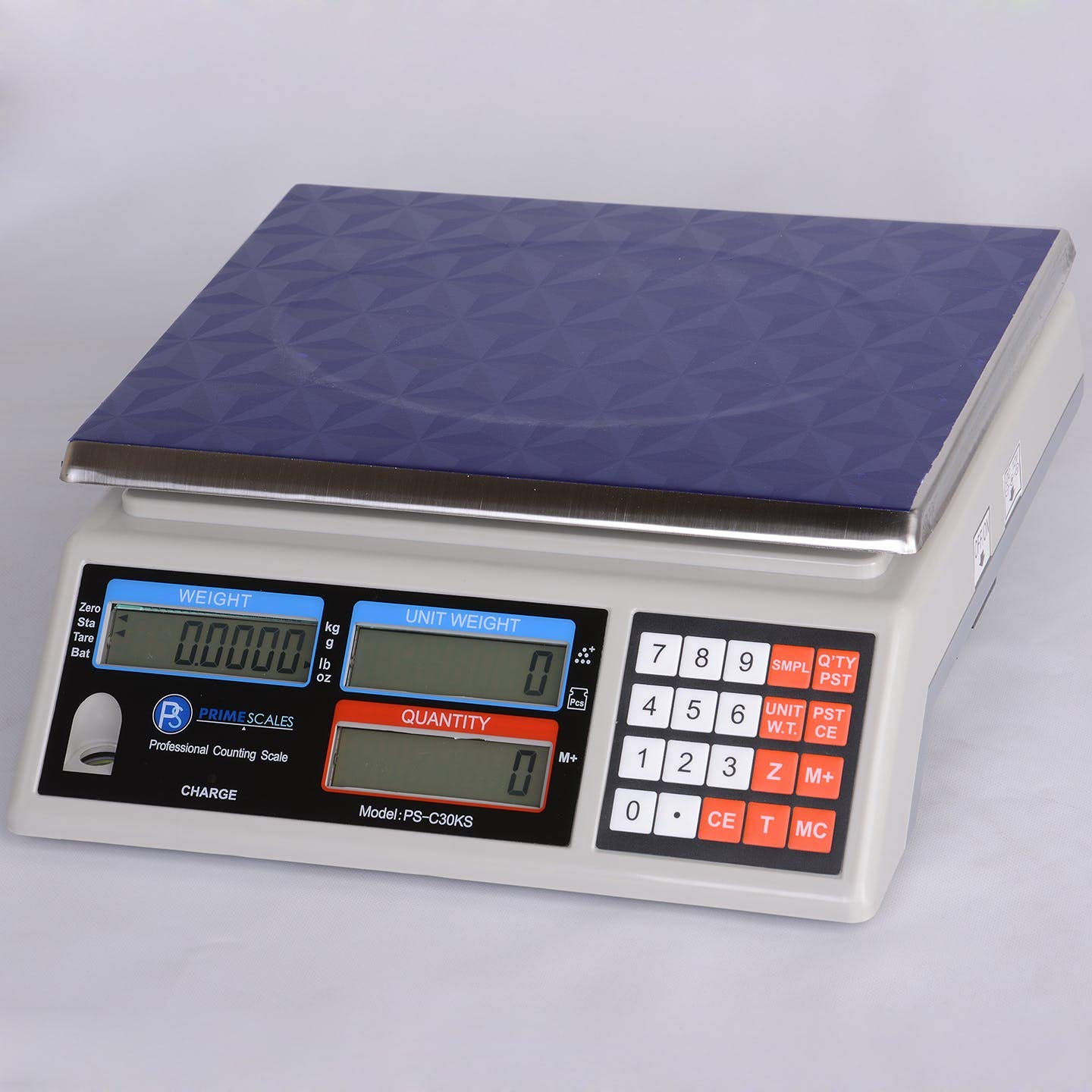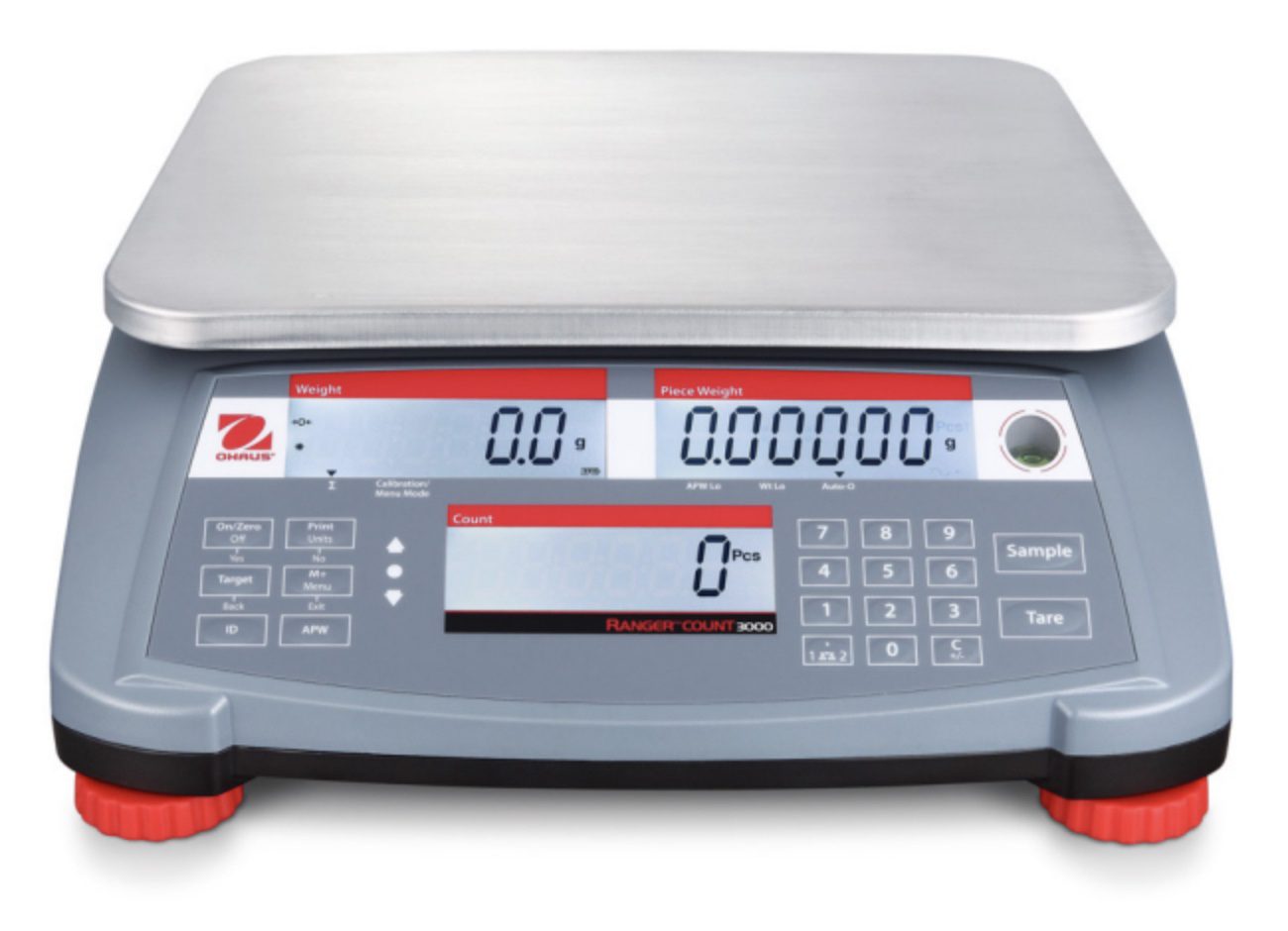
Why is my counting scale wrong — and how do I fix it?
Short answer
A parts counting scale divides total weight by an average piece weight, so every counting error comes from one of three places: the sample used to establish the average piece weight was too small, the pieces themselves vary in weight by more than the count tolerance allows, or the scale's internal counting resolution is too coarse for a piece that light. Sampling at least 25-50 pieces, using the scale's automatic sample-size enhancement, and choosing a model whose internal resolution is far finer than its displayed weight increment fixes the great majority of miscounts.
Written for warehouses, fastener and electronics distributors, kitting operations, inventory and cycle-count teams.
Does this apply to you?
- Cycle counts disagree with the scale by a few pieces on small hardware.
- The count is right for 100 pieces and wrong for 1,000.
- Different operators get different counts from the same bin.
- You are counting parts that weigh less than a few hundredths of the scale's displayed division.
How to decide
1. Re-sample with more pieces
A 10-piece sample carries the variation of those 10 pieces into every count. Sample 25-50, more for stamped or moulded parts with visible flash.
2. Use average-piece-weight enhancement
Most counting scales can refine the stored average piece weight after the first bulk count. Running that step once turns a rough sample into a statistically better one.
3. Check the part, not the scale
Plating thickness, moisture in cardboard or paper parts, mixed lots and burrs all shift piece weight. If piece-weight spread exceeds roughly 1 part in your count tolerance, no scale can hit the count.
4. Compare internal counting resolution
Displayed division is not the counting resolution. Good counting scales resolve internally 10-100x finer than they display, which is what makes light pieces countable. Compare this specification, not the headline capacity.
5. Split the job across two instruments
For very light pieces in heavy containers, use a precision balance to set the piece weight and the counting scale for the bulk count, or use a remote base so the container tare does not eat the resolution.
Diagnosing a miscount
| Symptom | Most likely cause |
|---|---|
| Off by 1-3 on small counts | Sample size too small when the piece weight was learned. |
| Error grows with quantity | Average piece weight is slightly wrong — re-sample and enhance. |
| Random errors on the same bin | Mixed lots or variable plating; count by lot. |
| Count reads zero or jumps | Piece weight is below the scale's usable counting resolution. |
| Wrong count after adding a container | Tare taken after loading, or container weight drifting from moisture. |
Frequently asked questions
How accurate are parts counting scales?
With a good sample and consistent parts, 99.5% or better is normal. Counting accuracy is governed by piece-weight consistency and internal resolution, not by the weight accuracy printed on the datasheet.
How many pieces should I sample?
25 as a minimum, 50 for parts with visible variation. Larger samples average out piece-to-piece spread, which is the dominant error source.
What is the lightest part a counting scale can count?
It depends on internal counting resolution rather than the displayed division. A scale that resolves internally to 1/1,000,000 of capacity can count parts far lighter than its display increment; check that figure on the specification sheet before buying.
Can I count with a regular bench scale?
Only for heavy parts. A general bench scale lacks the fine internal resolution and the sample-enhancement routine that make small-part counting reliable.
Still not sure? Tell us the job.
Describe what you weigh, the heaviest load and the tolerance you need to hold, and we will specify the instrument — including whether it has to be legal for trade. Same-day answers from Cypress, Texas.