Which calibration weight class do I need?
Short answer
Choose a test weight whose tolerance is no more than one third of the balance's permitted error at the load you are checking — a common and defensible working rule. In practice that means ASTM Class 1 or OIML E2 for analytical balances reading 0.1 mg, ASTM Class 2 or OIML F1 for precision balances at 0.001-0.01 g, and ASTM Class 4-6 or OIML M1 for industrial bench and floor scales. Legal-for-trade verification is normally performed with Class F or M1 weights by a registered service agency.
Written for calibration labs, QC teams, service technicians, regulated manufacturing and pharmacy.
Does this apply to you?
- Your SOP requires a documented daily or weekly balance check.
- An auditor asked for the traceability certificate of the weight you check with.
- You are checking a 0.1 mg balance with a hardware-store weight.
- Your weights are handled by bare hands and stored loose in a drawer.
How to decide
1. Find the balance's permitted error at your check load
For non-legal instruments use the manufacturer's linearity or accuracy specification at that load. For legal-for-trade devices use the maximum permissible error for the class and division count.
2. Apply the one-third rule
The weight's tolerance should be at most a third of that error, so the weight contributes little to the measurement you are judging.
3. Choose one weight near full capacity and one near a third
Span at full scale catches gain error; the mid-point weight catches linearity. Checking only at full capacity hides a bowed characteristic.
4. Insist on traceability
Buy weights with a NIST-traceable calibration certificate, and recertify on a schedule — annually for working weights in daily use, longer for reference sets kept in a case.
5. Handle and store them properly
Forceps or gloves only, never bare fingers on Class 1-3 weights. Keep them in the fitted case, at the balance's room temperature, away from magnets and moisture.
Class selection quick reference
| Instrument | Weight class |
|---|---|
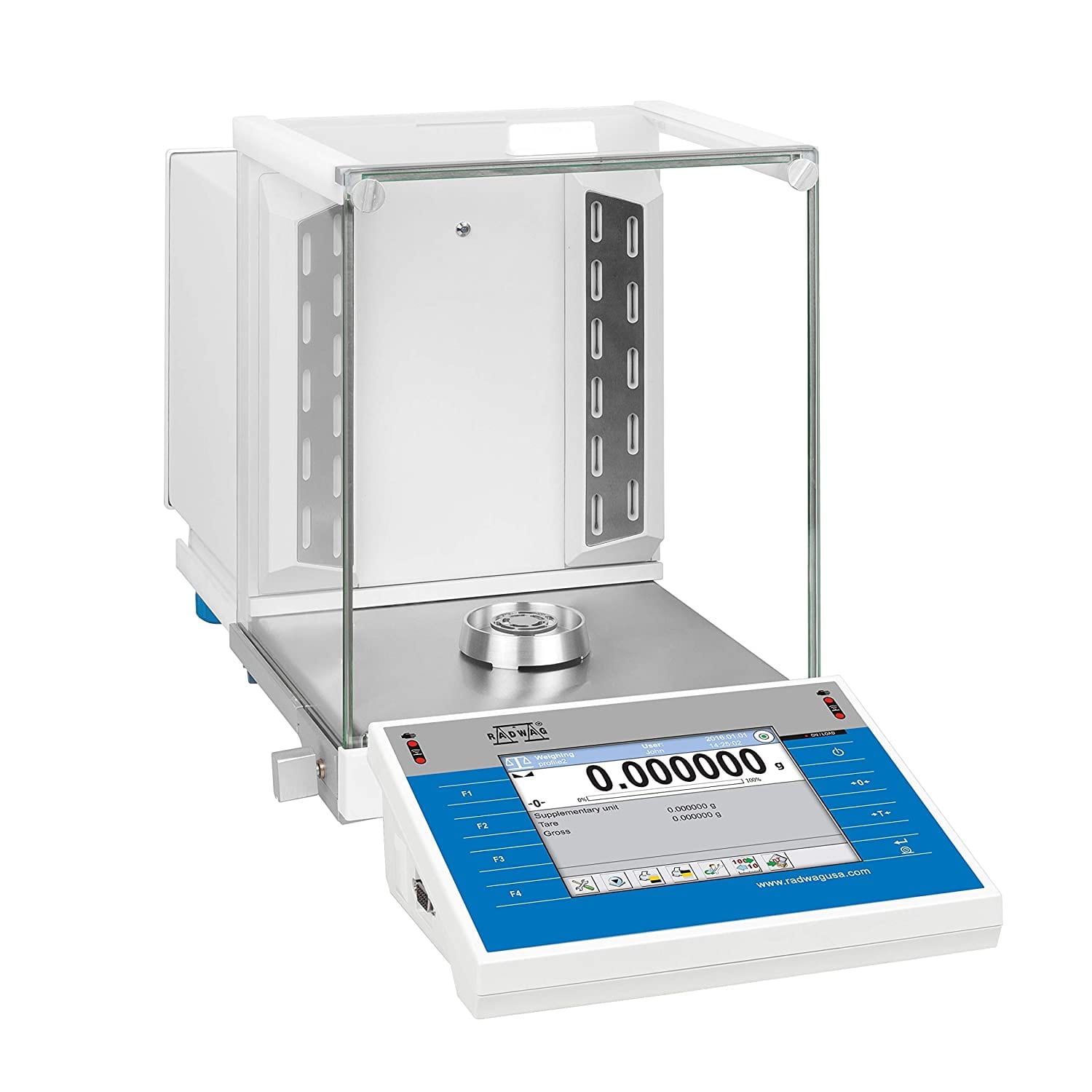
| 0.01-0.1 mg analytical balance | ASTM Class 1 / OIML E2 |
| 0.001-0.01 g precision balance | ASTM Class 2 / OIML F1 |
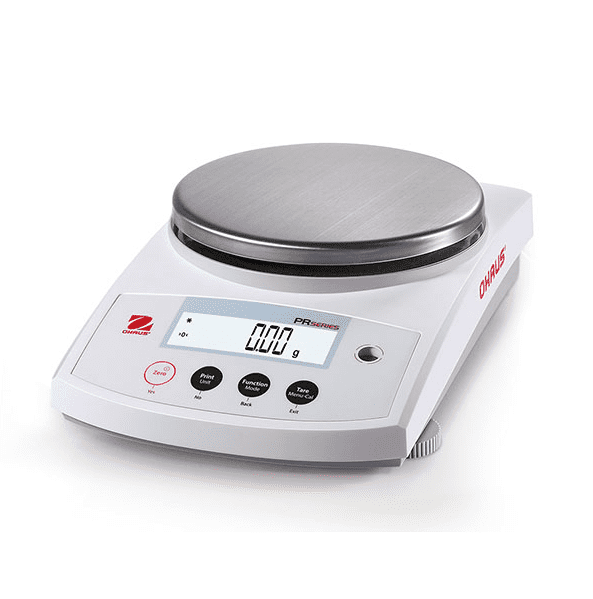
| 0.01-0.1 g precision or counting scale | ASTM Class 3-4 / OIML F1-M1 |
| Bench and shipping scales | ASTM Class 4-6 / OIML M1 |
| Floor, pallet and crane scales | ASTM Class 6-7 / OIML M1 (cast iron) |
Frequently asked questions
What is the difference between ASTM and OIML weight classes?
They are two tolerance systems for the same purpose. ASTM E617 runs Class 0 through 7 (0 tightest); OIML R111 runs E1, E2, F1, F2, M1, M2, M3 (E1 tightest). ASTM Class 1 is broadly comparable to OIML E2 for most working purposes.
How often should calibration weights be recertified?
Annually for working weights in routine use is the common interval; reference weights that stay in a case and are used to check other weights can go longer if the recertification history supports it.
Can I calibrate a balance with any weight of the right mass?
No. An uncertified weight has no known tolerance, so it cannot tell you whether the balance is inside its own specification, and it will fail any audit.
Does the calibration weight need to match the balance capacity?
Ideally span calibration is performed at or near full capacity with a single weight or a stacked set, then verified at roughly one third of capacity to expose linearity error.
Still not sure? Tell us the job.
Describe what you weigh, the heaviest load and the tolerance you need to hold, and we will specify the instrument — including whether it has to be legal for trade. Same-day answers from Cypress, Texas.