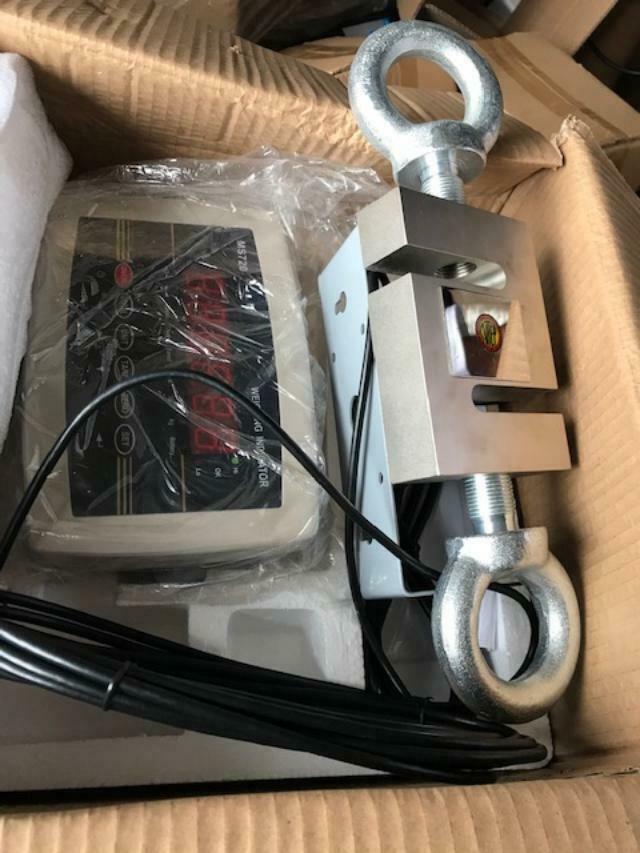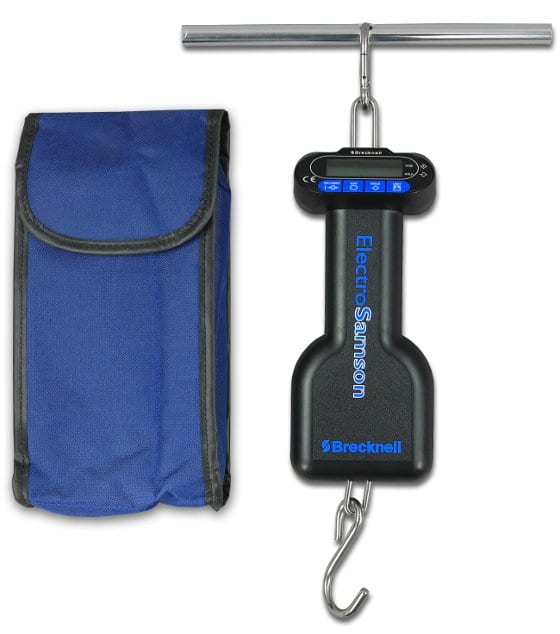
Crane scale capacity and safety — what to check before you lift
Short answer
Size a crane scale so the heaviest lift is comfortably below its rated capacity, then confirm that every element in the load path — hook, shackle, load pin and sling — carries a working load limit at least as high as the scale's, with the manufacturer's stated safety factor (commonly 4:1 or 5:1) intact. Never read the scale while the load is still swinging: tension varies dramatically during acceleration, so lift, let the load settle fully, and only then record the reading.
Written for steel service centres, scrap and recycling yards, fabrication shops, marine, rigging and crane crews.
Does this apply to you?
- You are estimating load weights from a bill of lading rather than measuring them.
- Your shackles and hooks were sourced separately and their grades are unknown.
- Readings vary by hundreds of pounds on the same load — that is swing, not scale error.
- The scale has been dropped, shock-loaded or exposed to weather without re-verification.
How to decide
1. Never work above rated capacity
Rated capacity is a measuring limit, not a lifting recommendation. Choose a capacity with genuine margin above your heaviest routine lift.
2. Check the whole load path
Hook, shackle, load pin, sling and crane must each be rated for the load. The weakest element defines the safe lift, and the scale is often not it.
3. Verify the safety factor
A 4:1 or 5:1 safety factor should be stated by the manufacturer and must not be eroded by substituting non-matching hardware.
4. Let the load settle
Take the reading only when the load is static and clear of obstructions. Peak-hold and averaging modes exist for exactly this reason — use them.
5. Inspect and re-verify
Visually inspect the hook and shackle for deformation and cracks before each shift, and re-verify the scale with a known load after any shock event and on a documented periodic schedule.
Typical crane scale sizing
| Heaviest routine lift | Capacity to specify |
|---|---|
| Under 400 lb | 1,000 lb |
| 400-2,000 lb | 2,500-5,000 lb |
| 2,000-8,000 lb | 10,000 lb |
| 8,000-16,000 lb | 20,000 lb |
Frequently asked questions
How accurate are crane scales?
Typically 0.1% of full capacity for industrial models, but only on a settled, freely hanging load. Side loading, wind and swing dominate the error in real use.
Can a crane scale be used for legal-for-trade weighing?
Only if the specific model is NTEP-certified and installed and sealed accordingly. Many industrial crane scales are not, and are intended for process weighing only.
What safety factor should a crane scale have?
4:1 or 5:1 against ultimate strength is standard. The figure applies to the scale body and its load pin, so it is void the moment unrated shackles are substituted.
Why does my crane scale reading keep changing?
Almost always dynamic load: the mass is accelerating, swinging or partially supported. Let it hang free and settle, or use the hold function.
Still not sure? Tell us the job.
Describe what you weigh, the heaviest load and the tolerance you need to hold, and we will specify the instrument — including whether it has to be legal for trade. Same-day answers from Cypress, Texas.